
Senneville
Home / Neighborhoods
Senneville 0 properties
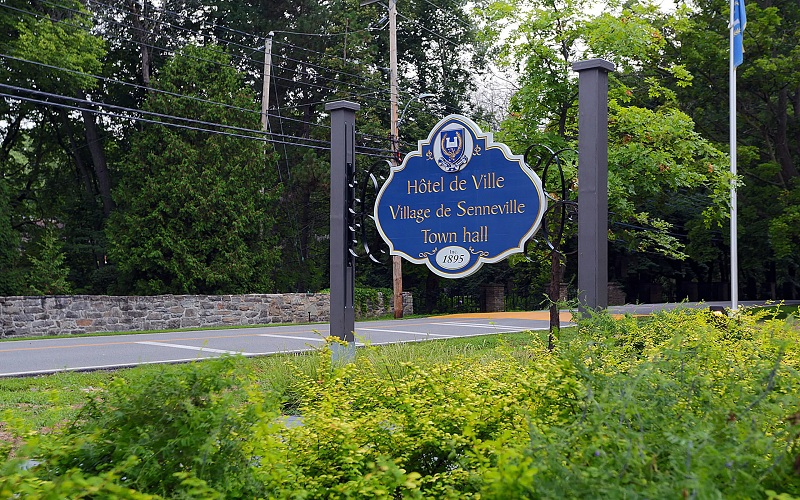
Senneville is a village municipality in the Greater Montreal area of Quebec, Canada. Incorporated in 1895, it is particularly recognized for the historical and architectural value of its heritage. It is also one of the oldest settlements in Quebec.
Toponymy
The town is named in honour of Jacques Le Ber de Saint-Paul de Senneville, a merchant in New France, after his birthplace, Senneville, France. The former parish of the same name, Senneville, in the province of Normandy (now a region), is now a hamlet within the municipality of Amfreville-sous-les-Monts. It is attested in early Latinized forms such as Sanavilla around 1240.
This is a toponymic formation ending in -ville, in the old sense of "rural estate, village," preceded by a Romance adjective, as is sometimes the case (cf. Belleville, Grandville, Hauteville, etc.), likely the adjective sain (healthy), derived from the Gallo-Roman SANA.
It literally means "healthy town," but it is difficult to determine whether the meaning is that of "fertile rural estate" or "wealthy village." However, a parallel can be drawn with the Santerre region of Picardy, designated Sana Terra in 885, meaning "fertile land," which would suggest that Senneville more likely means "fertile rural estate."
However, the resemblance to Senneville-sur-Fécamp (Sonevilla in 1025, Seigneville around 1119, Seneville in 1154) and Senneville (Eure-et-Loir, Sesni villa 1080, Senni villa 1121, Senesvilla 1109) is undoubtedly coincidental; their etymologies, according to the older forms, are different.
Geography
Senneville is a small municipality on the western tip of the Island of Montreal.